

 myFrasersProperty
 13 38 38



Navigating the crosscurrents: Where to buy and invest property in 2026



Interest rates have moved in a direction few expected, but so has buyer demand. As migration, infrastructure, and government policy converge, Australia’s property fundamentals remain remarkably strong — and 2026 is shaping up as a year that rewards those who are prepared to invest in property.
If there’s one thing I’ve learned in over a quarter of a century in property, it’s that no two years ever feel the same. Yet the long view almost always rewards patience. After a few turbulent years of economic recalibration, 2026 is proving that the crosscurrents aren’t quite done with us yet — but the underlying direction of the market remains clear.
We’re now navigating a fascinating — and at times unpredictable — intersection: population growth at record highs, government incentives re-energising demand, and infrastructure projects transforming how and where Australians live, all counterbalanced by the ongoing question of interest rates versus inflation.
In short: it’s a market full of opportunity, but it’s not a “set and forget” environment. Buyers and investors who take a thoughtful, long-term approach, one grounded in real fundamentals, stand to benefit most.
The macro picture
Last year, most property commentators were making cautiously optimistic forecasts of growth, and for most of the year that caution proved correct. Then came the Federal Government’s 5% First Home Buyer Deposit Scheme and a couple of rate cuts, and activity surged. So much so that KPMG upgraded their property market forecast in 2026 to 7.7% nationally.
Looking ahead, that underlying growth trajectory is expected to continue, with units growing at 7.1% based on supply and relative affordability.
But here’s where the picture has recently shifted. Inflation just isn’t easing as quickly as many had hoped. Higher rents, insurance premiums, and energy costs are still feeding through the system. With the labour market remaining resilient, the RBA simply doesn’t have the breathing room it wants, which is why it lifted interest rates at its February meeting. Only a few months ago, the conversation was all about further cuts. Now, interest rates may stay higher for longer, and several major banks are tipping a further rise in May.
That does have consequences for the housing market, but right now this looks more like a modest blip than a sharp correction. The fact is, there simply aren’t enough homes to go around, and that continues to put a floor under prices. What higher borrowing costs do is slow things down and change how buyers behave. They create uncertainty, and uncertainty makes some people sit on their hands for a while.
We continue to have strong population growth, high employment, and nowhere near enough new housing being built. When listings are well below long-term averages and there are still far more people looking for homes than there are homes available, a single rate hike isn’t going to change that equation.
And that’s exactly why I see this period as a genuine opportunity for people who are prepared. If your finance is sorted, you’re walking into a market with fewer competitors — and that can mean better negotiations, better choice, and better long-term outcomes. Those outcomes are still driven by the same three forces that underpin Australia’s growth story: population growth, housing undersupply, and infrastructure delivery. For anyone looking to invest in real estate this year, these fundamentals are key.
Population and policy
Population growth remains the single most powerful driver of housing demand in Australia, and it shows no signs of slowing. Net Overseas Migration is forecast to add around 223,400 new residents in 2026–27, with approximately another 115,000 through natural increase, reinforcing the nation’s long-term housing needs. Victoria continues to lead the resurgence, with Melbourne expected to add 840,000 people over the next decade, on track to overtake Sydney as Australia’s largest city by 2035.
Governments at all levels are now leaning into this opportunity, with policy settings designed to both unlock supply and support accessibility. On the supply side, initiatives such as the Housing Australia Future Fund are underpinning a pipeline of around 55,000 new affordable homes, while Build-to-Rent tax concessions are encouraging major institutional investment in long-term rental housing.
At the same time, demand-side measures are giving more Australians a genuine foothold in the market. The expanded 5% First Home Buyer Deposit Scheme, as well as first home buyer grants and off-the-plan stamp duty concessions available in Victoria, New South Wales, and Queensland, are helping more people purchase sooner and with greater confidence.
Together, these factors are fuelling activity at the entry level and strengthening the broader market. The combination of population growth, government investment, and high-quality, masterplanned development continues to position property as one of Australia’s most resilient long-term assets. And it’s why at Frasers Property, we continue to focus our communities in growth-ready regions like Melbourne’s west and south east, Sydney’s innovation corridors, and south east Queensland’s emerging urban heartlands.
State outlooks and growth corridors
If you’re considering the best places to invest in real estate this 2026, these are regions to watch:

New South Wales
For those looking beyond the traditional inner ring, the growth story is unfolding along the south west and north west corridors, where infrastructure and amenity are catching up fast.
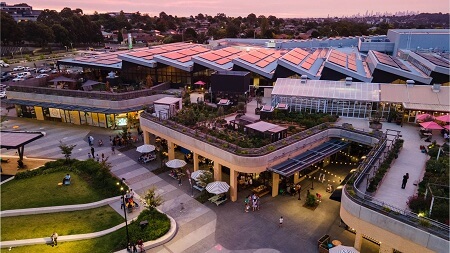
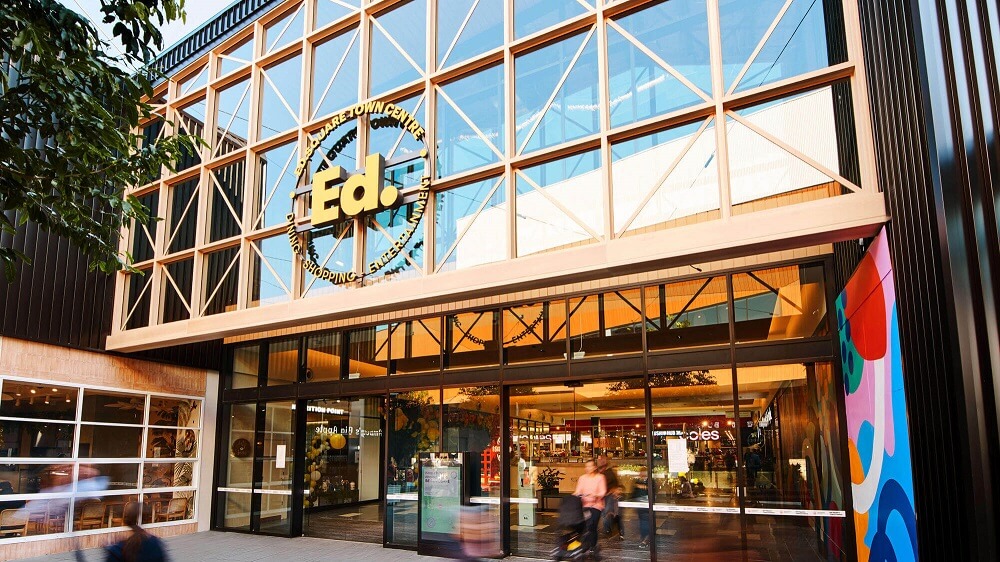
The Camden and Liverpool LGAs are some of the fastest growing in the state. Home to Frasers Property’s popular Ed.Square community, these regions are benefiting from new transport links and the broader Western Sydney Airport ecosystem.
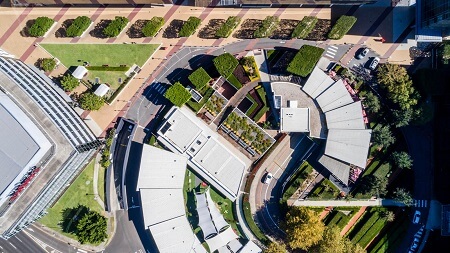
The City of Ryde, anchored by the Macquarie Park innovation precinct, is also seeing renewed investor and owner-occupier interest, supported by new rail connections and a growing employment base. Our Midtown MacPark neighbourhood is setting new standards for multi-tenure, high amenity living, recently taking out a number of industry awards for excellence in urban planning and development.
These areas demonstrate a broader truth about Sydney: affordability may be tight, but infrastructure remains the great equaliser.
Victoria
If 2025 was the year of Melbourne’s reset, 2026 looks to be its rebound with underlying demand expected to push house prices up by 6.8% and units by 7.3% in 2026.
The appeal lies in value and connectivity. Growth corridors such as Wyndham, Cardinia, and Casey — where Frasers Property communities like Mambourin Green, Five Farms, and Berwick Waters are located — continue to attract young families and investors seeking space, affordability, and strong rental returns.
Infrastructure investment is another key factor. Major transport projects, including the Metro Tunnel and the West Gate Tunnel have reshaped the urban footprint and brought outer suburbs closer to the heart of the city. These projects are also stimulating job creation, which in turn drives local demand.
Queensland
Queensland’s property story remains a standout. Brisbane is forecast to see growth in house prices of around 11% in 2026, with the Cross River Rail and broader Olympics infrastructure rollout acting as long-term catalysts.
Further south, the Greater Flagstone region, one of south east Queensland’s fastest-growing urban corridors, is emblematic of the new wave of suburban investment. It combines affordability with access to new infrastructure, schools, and community amenities. Our own Round Mountain project sits within this region, part of the broader vision for sustainable, connected living in Queensland’s growth belt.
Closer to the CBD, The Quarry in Keperra — Brisbane’s most elevated masterplanned address, just 9.5km from the city — demonstrates the demand for premium living that balances hilltop tranquility with everyday convenience. These dual stories — outer-ring affordability and middle-ring desirability — illustrate the depth and diversity of Brisbane’s market.
Time in the market
With headlines dominated by rate movements and shifting forecasts, it’s easy to lose sight of the bigger picture. The real differentiator in property is time in the market, not timing the market.
We’re navigating a phase of growth shaped by demographics, policy, and infrastructure — but tempered by a more uncertain interest rate environment than we expected. Demand is strong, supply is tight, and Australia’s long-term fundamentals remain exceptionally robust. The short-term picture may be less predictable, but the long-term story hasn’t changed.
For buyers and investors willing to look beyond the noise, 2026 rewards preparation over hesitation. The tide isn’t rushing in all at once, but the fundamentals favour those who are ready to move with confidence and a long-term view.
What matters most: the fundamentals of good investment
Whether you’re buying your first home or your fifth, the fundamentals haven’t changed. Look beyond short-term sentiment and focus on what drives enduring value:
- Population and employment growth in the local area.
- Infrastructure investment: transport, education, retail, and recreation.
- Community and liveability: what it feels like to belong there, not just what it costs to buy.
- And perhaps most importantly, the reputation and track record of the developer.
In a market defined by long lead times and complex delivery challenges, who you buy from matters. It’s about confidence — knowing the neighbourhood promised is the neighbourhood delivered.
This information is general in nature and not financial or professional advice. Please consider your own circumstances and seek independent professional advice before making decisions.

Emily Wood
Executive General Manager
See more articles on


