

 myFrasersProperty
 13 38 38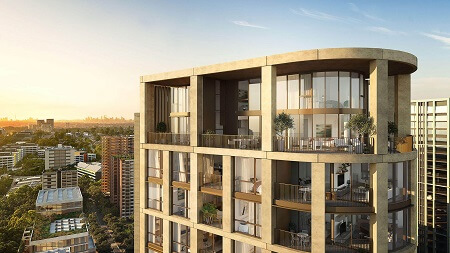




Property types and ownership structures
Understanding property types and ownership structures
As a first home buyer, one of the biggest decisions you’ll make is choosing the type of property and how it’s owned. This guide highlights the main options, giving you the clarity to compare and decide what best suits your lifestyle, budget, and long‑term goals.

Your options: property types explained
Whether you dream of a spacious backyard or a vibrant urban lifestyle, there’s a property type to suit your needs. Here’s a quick overview:

Land only
Buy a block of land and build your dream home from the ground up.

House & land package
A new home and land, bundled together for a streamlined process.

Turnkey Home
Ready-built homes—move in as soon as you get the keys.

Townhouse
Modern, low-maintenance homes that balance privacy with community.

Apartment
Convenient, connected living with shared amenities.
Building your first home

Many first home buyers feel intimidated by the thought of building their first home rather than purchasing an established home.
While there are a few more steps involved in the process, the final outcome can be tailored to suit your exact needs and wants. Plus, there are a number of financial support schemes that are on offer exclusively for newly built homes.
If you do choose to build your own home, there are three methods of purchase you can select from - land only, house and land packages and ready built or 'turnkey' homes. Whichever method you choose, the best place to start is by visiting a builder display village to get a sense for the size and style of home you would like to build as well as the land size and budget this will require.
Land only
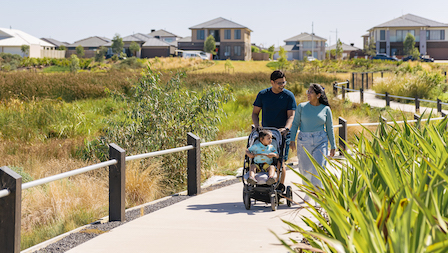
Purchasing land gives you the ultimate flexibility to design and build a home that reflects your vision and lifestyle.

Purchasing
Buying land and choosing your own builder to construct offers the most flexibility. You can either select a block in a community you love first, or choose the perfect home design and then find land that will suit. To secure a land lot with Frasers Property Australia, you’ll need to pay a holding deposit to reserve the lot, followed by the balance of the deposit within 7–14 days. The full purchase price is due once the land titles. If your land is already titled at time of purchase, settlement is usually within 30–60 days, depending on your contract.
Designing your home
Your chosen home design must meet the developer’s siting and design guidelines, covering aspects like layout, landscaping, fencing, and positioning on the land to ensure community cohesion.
Building your home
After titling and design approval, your home will be constructed in several stages that may take anywhere from 6-18 months depending on the design, with progress payments made at each milestone.
Benefits of buying a land lot
House and land packages
A house and land package combines a new home and a block of land in one convenient bundle.

Purchasing
In this case, a builder has already secured the land lot and prepared a home design that is well suited for that block.
The purchaser will enter into two contracts, one with the builder for the home, and one with the developer for the land. You can often customise finishes and small details, but the floor plan is generally set.
Designing your home
Once you have worked with your builder to make any adjustments to your home design, the builder will work with the developer to seek design approval according to the community's design and siting guidelines.
Settlement
Once the land is settled, construction begins in stages over 6-18 months, with progress payments made to your builder at each major milestone.
House and land package benefits
Ready built or ‘turnkey’ homes
Turnkey homes are ready-built, fully finished properties — just turn the key and move in.

Purchasing
Sometimes a house and land package is sold after construction has been completed, often referred to as a Turnkey Package. These homes come complete with everything you need to move in - like landscaping, driveways, and letterboxes- making this a great low-fuss option for new homebuyers. There's no waiting for construction or making endless decisions. You pay a deposit, sign one contract with the builder and pay the remaining balance of the purchase price upon completion.
Settlement
Settlement typically happens within 60-90 days of putting down your deposit.
‘Turnkey’ key benefits
Buying off the plan
Buying off the plan is when you sign a contract to purchase a home, often an apartment or townhouse, that is yet to be built.

There are other benefits as well, including:
- You’re more likely to qualify for any off-the plan tax exemptions and incentives offered by your state government.
- Increased tax depreciation opportunities.*
- Early purchasers will enjoy a greater selection of what’s available in a building that meets your criteria considering view, aspect, and preferred floorplan.
*It’s worth speaking to your accountant or financial planner to fully understand how to take advantage of this at tax time.
Townhouses
Townhouses offer a modern, low-maintenance lifestyle, often in established or emerging communities.
Townhouses are typically two‑ or three‑storey homes that share walls with neighbours, designed to maximise space while keeping the footprint compact. They suit busy lifestyles where a large yard isn’t a priority, offering private living with a community feel that appeals to first home buyers and young families.
Off‑the‑plan purchases often allow customisation of finishes, with settlement typically 12–18 months after construction begins, giving purchasers time to plan and prepare. Most townhouses are part of a strata scheme, meaning residents contribute to the upkeep of shared amenities like gardens or driveways through strata levies, ensuring well‑maintained spaces and a cohesive community.
Artist’s impression
Townhouse key benefits
Apartments
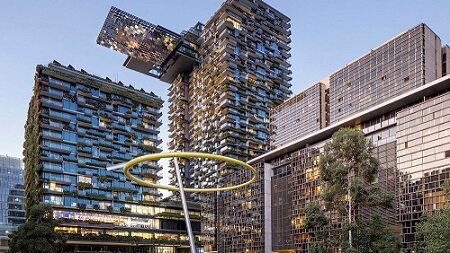
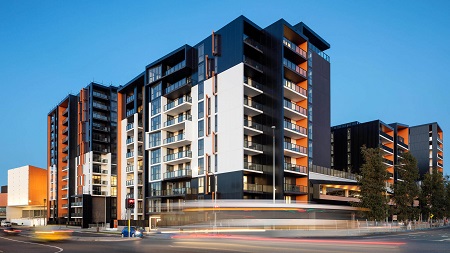
Apartments provide convenient, connected living — perfect for those who value location and amenities.
Buying an apartment means owning your unit plus a share of common areas like gardens, foyers, and gyms. Most are strata‑titled, with an owners’ corporation managing upkeep and enforcing by‑laws. This setup makes apartments ideal for low‑maintenance, lock‑up‑and‑leave living, especially appealing for busy professionals and frequent travellers.
Off‑the‑plan purchases may offer limited customisation of finishes, with settlement usually 18–24 months after construction begins — giving buyers time to plan and save. Residents enjoy shared facilities maintained through strata fees, while urban locations provide easy access to transport, shops, entertainment, and nearby medical and educational facilities.
Apartment key benefits
Ownership structures: what you need to know
Understanding how your property is owned is just as important as choosing the type of home. The main structures are:
Torrens title
You own the land and the building outright — common for standalone houses and land. There are no shared areas or collective responsibilities — ownership is individual and absolute. This means you are solely responsible for the maintenance, insurance, and any improvements to your property, giving you complete control but also full accountability.
Strata Title
You own your individual unit (apartment or townhouse) and share ownership of common areas like foyers and gardens through an owner’s corporation or body corporate.
Strata schemes outline the rights and responsibilities of all parties, including resident obligations around noise, pets, storage, and other common issues. All owners must pay levies — typically quarterly or annually — which fund the administration, upkeep, and any scheduled or emergency works within the scheme.
Community title
Similar to strata but applies to larger, masterplanned developments that include a broader range of shared facilities, such as private roads, parks, recreational areas, or clubhouses. While you own your individual lot or dwelling, you also share ownership and responsibility for these communal spaces through a community association. Owners contribute levies to cover the upkeep and management of shared facilities, and community by‑laws set out rights and responsibilities, much like strata schemes but on a wider scale.
|
Tip: Each structure comes with its own responsibilities, so it’s important to understand what’s involved — especially regarding levies, by-laws, and your rights as an owner. For more on strata and community title, see Lawdocs.au. |

Choosing what’s right for you
Your first home is a foundation for your future. Consider your lifestyle, budget, and long-term goals as you weigh your options. Visit display villages, talk to developers, and seek advice from professionals. At Frasers Property, we’re here to help you make a choice you can be proud of — one that supports your wellbeing, fosters community, and leaves a positive legacy.
Quick comparison table
| Property type | Ownership structure | Flexibility | Maintenance | Customisation |
|---|---|---|---|---|
| Land only | Torrens | High | Varies | High |
| House & Land | Torrens | Medium | Medium | Some |
| Turnkey home | Torrens or Strata | Low | Low | Limited |
| Townhouse | Strata or Community | Low | Low | Limited |
| Apartment | Strata or Community | Low | Low | Limited |
I also want to know


*All opinions, estimates, forecasts, statistics, links to external websites, conclusions, recommendations, and underlying assumptions contained within this webpage are made and expressed by Frasers Property Australia in good faith, in the reasonable belief that they are correct and not misleading as at the date of publication. This content is of a general nature only and does not take into account your personal objectives, financial or taxation situation, or needs. It does not represent financial, taxation, legal, or other professional advice and should not be regarded as such. Information about grants, schemes, and other costs is provided for general guidance only and may change over time. Frasers Property Australia does not make any express or implied representations or warranties that external links or third-party information are accurate, complete, or current. Before acting on any information provided, you should fully consider its appropriateness for your circumstances and, if necessary, seek independent professional advice.