

 myFrasersProperty
 13 38 38


Live proud podcast Ep.9. From Ed.Square to Kolkata: a friendship that crossed the world
How genuine, resident-led community development turned neighbours into family — and took an Ed.Square connection all the way to a destination wedding in India.


Listen on
Transcript
Show notes
Full transcript
- More than bricks and mortar: True community development goes far beyond developer-run barbecues; it is about empowering residents to co-design, lead, and champion their own local initiatives so the neighbourhood thrives sustainably.
- Connection born in lockdown: Resident Sanjukta "Pinky" Chandra moved into Ed.Square in August 2020 during COVID-19 restrictions. What started with virtual balcony events and a shared love of Bollywood with Frasers Property Community Development Manager Claire Palmer quickly evolved into an unbreakable bond.
- From neighbours to family: Five years after meeting at an Ed.Square pre-Christmas event, Pinky invited Claire and her young family to Kolkata, India, for her daughter’s 300-plus guest destination wedding, welcoming Claire into the innermost family circle for the sacred fire ceremony.
- National recognition for resident-led wellbeing: The Ed.Square Residents Group — in partnership with Frasers Property Australia and Fourfold Studios — won the National PIA Award for Excellence (Community Wellbeing and Diversity Award), recognising how local residents actively drive the neighbourhood's social fabric.
- Community as a catalyst for homeownership: Pinky originally moved to Ed.Square as a temporary renter. However, the warmth, inclusivity, and deep sense of belonging convinced her to stay permanently and bring her extended family, including her in-laws and stepdaughter, to purchase apartments in the community.
- Resilience beyond physical spaces: When the Ed.Square community centre closed for four to five months for renovations, resident-led initiatives did not stop. Volunteers independently relocated board games, journaling clubs, and social groups to local cafes, restaurants, and the bowling alley, proving that social sustainability lives in the people rather than the building.
- Strength in cultural diversity: With 145 different languages and dialects spoken around Edmondson Park, regular resident-run celebrations, such as the annual Diwali festival, Chinese New Year, potluck dinners, weekly playgroups, meditation, and Thursday night Zumba, turn multiculturalism into a daily source of connection and shared learning.
- Measurable impact on loneliness: Driven by Frasers Property’s three-year partnership with Ending Loneliness Together, the latest Great Neighbourhood Survey reveals that 95% of Ed.Square residents smile and say hello to a neighbour, and residents feel 50% more connected than the wider community average.
- Advice for new neighbours: Both Claire and Pinky encourage newcomers to step outside their comfort zones, show up authentically to local events, and start with a simple smile and hello — because small, genuine interactions are the building blocks of a village where everyone belongs.
Brent: Welcome to the Live proud podcast. I'm Brent Hill. Here's a question: when was the last time a work colleague became so important that you flew halfway around the world to have them at your daughter's wedding? Well, that's what happened to my guest today. Claire Palmer is a community development manager at Frasers Property Australia. Sanjukta Chandra, affectionately known as Pinky, is a resident at Ed.Square in Sydney's southwest. Their friendship started over a shared love of Bollywood and a willingness to show up for each other, and it became something neither of them had expected. Their story says a lot about what genuine community looks like, but it also raises a bigger question: in a country where one in three adults report feeling lonely, what does it actually take to build neighbourhoods where people don't just live next to each other, but genuinely belong? Welcome, Claire and Pinky — thanks for joining us today. We've got quite a bit to go through, some really heartwarming stories and some interesting topics. But Pinky, first of all, the question goes to you. I want to take us back to the beginning, when you first moved to Ed.Square. What do you remember about meeting this beautiful lady, Claire?
Pinky: Oh, she's my family already. Yeah, I moved to Ed.Square in 2020, August. Yeah, it was 23rd August. Yeah, I remember the date.
Brent: So it was during COVID.
Pinky: Yeah, just — yeah. COVID, yeah. In between.
Brent: It would have been quite a volatile world we were going through, and hard to actually connect with people, particularly when COVID came in. So forming connections became pretty rare, from memory, but also really important. Could you talk me through your first memories of chatting to Claire?
Pinky: First memory of Claire was — the first one was virtual, because we had a virtual event going on, the band going around, and we were watching from the balcony. It was like that, we couldn't come out of our houses —
Brent: So it was a virtual community event? You didn't meet face to face?
Pinky: Yeah, but then it was face to face prior to Christmas. It was a Christmas event. That's the first time I met Claire, and I think we got going instantly. It was an instant click.
Brent: Love at first sight.
Pinky: Yeah, that's what it was like — love at first sight. And after that, I kept attending all the community events. And then once we went for a walk-through of what was coming up in Ed.Square, and then I didn't miss a single one, because I was so impressed by her, liked her so much. She was so warm, welcoming — lovely lady she is.
Brent: Yes, absolutely. Could you talk through the events and how you met? As you mentioned, some might have been virtual through COVID, but then the in-person events started coming through. Could you talk through some of the first events that you attended — why did you attend, and who did you attend with?
Pinky: The first event face to face was that pre-Christmas party, yeah. And then we talked about — there was her love for Bollywood, and we are somewhat a little bit into Bollywood.
Brent: I saw that there was a mutual interest you have with Bollywood. Yes.
Pinky: And we were thinking of filming a shoot — I mean, a film there. We were thinking of having a shoot or something, but that did not happen because of COVID. COVID came on strong, so that did not happen at all. But that was the first thing that got us together, and after that, it was every event. It was a simple walk-through of what is coming up in the community — with all the helmets and all that, we walked through.
Brent: I'm sure there were a lot of other connections you started forming during that time as well — not just with Claire, obviously, being the ambassador for it, but other connections you formed through that. Claire, later down the track came a probably unexpected wedding invitation — for Pinky's daughter's wedding, of all places, back in India. What were your first thoughts, and how were you feeling at that time when you received the invitation?
Claire: I think my first thoughts were, this is a huge logistical mountain for me to climb. My daughter was three and my son was eight. So while it was a very generous offer of Pinky's, and I was incredibly honoured to be welcomed by her family, I was thinking, yeah, this is not exactly the first —
Brent: So initially you might have been overwhelmed by the gesture — which is beautiful — the logistics, just thinking, well, do I go by myself? Do I take my family? Is it something we can afford to do, or do logistically with time and so forth? Talk me through that.
Claire: Yeah, and initially I just thought, no, I can't do this, because it's too big a feat for a young family. India had been on my bucket list, as Pinky knew, for a long time, but I didn't anticipate that'd be the first place I'd take the kids abroad. But my husband said —
Brent: So, first overseas trip for the kids.
Claire: Yeah. My husband said yes, and I spoke to a few people at Frasers, and they were like, “Absolutely, you should go, it's such a great opportunity.” And Pinky was pretty adamant that I was coming, and that everything would be taken care of. So I put a lot of trust in her and Ron's hands.
Brent: It sounds like a Bollywood story in its own right — the family embarking on this journey to a foreign country for their first overseas trip with a young family. Talk us through, Claire, what the kids were thinking. Particularly your eight-year-old probably had more of an understanding of going abroad to India than a three-year-old. What were their thoughts?
Claire: They were excited. They know Pinky, and they'd been to a few events at Ed.Square — when we'd had picnics and things in the park, I'd try to bring the kids.
Brent: So there was a connection there with the kids.
Claire: There was a connection. My son loves cricket, so there was that connection. We started watching some documentaries together — 'Steve Waugh Goes to India', that sort of style of stuff. So he was anticipating it, but he couldn't really ever imagine what awaited him.
Brent: And this is a work relationship you'd formed, but it became a very personal relationship. What were your husband's thoughts on this?
Claire: He was up for the adventure, surprisingly. He recognised how important Pinky was to me, and the friendship. And at that stage, I'd been working at Ed.Square for five years, so I'd gotten to know Pinky and Ron and Shreya. And there was another Ed.Square family that was coming along — Shivani and Andrew. So he was surprisingly on board. Yeah.
Brent: What a man! Can see why you married him. But Pinky, why was it so important that you had Claire attend the wedding?
Pinky: It was for close family and friends. The wedding — it's a destination wedding. And Claire is very, very close to me. Not my friend — that's what I said — anymore. Family. We were so close, we were friends already, five years down, and very close. I couldn't think of it without her.
Brent: Yeah.
Pinky: I just couldn't, because it was an event for absolutely close family and friends. A destination wedding in India. And I told her, “Don't worry, I'm there.”
Brent: Well, I note that there were about 300 people at the wedding — [more than that] — oh, okay, more than 300 people. Just a small destination wedding of 300-plus guests. But in hearing about the story, your family were invited on the family table — you must have felt very honoured to be part of it. And Pinky, obviously you have a lot of respect for Claire and the family, for them to be invited on that table. What an honour it must have been. Could you share that experience with us?
Claire: It was. I think, for me personally, it was definitely very moving, and a very culturally rich experience. But from a professional point of view, it made me get some insight into what it must be like for residents who come from all different parts of the world to live at Ed.Square, and you're out of your comfort zone. You don't speak the language, and then somebody reaches out their arm and offers you a warm, friendly welcome. And that's how I felt with Pinky. Although she was overseeing wedding planners, doing five events over three days, I could see she always had one eye in the corner: where's Claire, where's Claire's family, are they looked after? And so, although we were out of our comfort zone, I never felt completely overwhelmed. My children got a lot of attention in all of the events, but Pinky made sure that traditions and rituals and everything was explained to us, and just literally took me under her wing the whole time.
Brent: Was it everything that you thought? Or was it —
Claire: Oh, beyond! It was incredible. It was amazing. It was —
Brent: The food, the music, the colour. What stood out to you at the ceremony as something you go, that'll be with me for the rest of my life?
Claire: There's a series of five events. I can't remember all their names, but I remember the dress codes that Pinky gave me — very strictly. But it's actually the finale, where they do the rituals, and there's a lot of tradition, and it's a much more intimate setting, and that's where they get married and —
Pinky: The actual wedding ceremony.
Claire: The actual wedding ceremony. And I think that was where Pinky and Ron saw a lot of guests had left. It's a bit different to Western weddings, where the actual tying of the knot is insignificant to their big calendar of things happening over the three days. And it was when we sat down there, I think at one in the morning, that it just really hit me — wow, I'm here, and I'm part of it. It was very, very moving. It was very, very rich.
Brent: Yeah. Pinky, it must be a bond that you're going to have for the remainder of your life — [Oh yes] — sharing those memories with Claire and her family. I can't imagine the joy you must have had during that time.
Pinky: Yeah, she was with me. I mean, it was so great. She was with me. And even that actual — I don't know how to explain — the actual wedding around the fire that takes place in Indian culture, I don't know whether you know it or not. Only absolutely the just family, and even not the extended family. But I wanted Claire there, and she was there.
Brent: Yeah, well, as I said, I know Claire was absolutely privileged, and I'm sure that connection will be with you for a very long time — and incredible that it was formed out of a virtual conversation at a community event. Claire does that as passionately as her role accelerates so quickly into going to the other side of the world to a wedding and forming that relationship. Claire, a question for you. We're hearing it quite a bit now about community development in masterplanned projects, greenfield projects, and also high-density apartment projects. Some people just think, okay, you'll organise a barbecue or some welcome drinks. What actually is community development? And I know you've been awarded, which we'll talk about in a moment — but as a national leader, really pioneering what community events are about, can you talk us through that?
Claire: Yeah, sure. I think there is a place for the Christmas parties and barbecues and picnics that you do see traditional developers do. But I think, at its heart, community development is more about empowering the local people. So we're taking a collective of neighbours and people that don't necessarily know each other. The social component does run through it — that's the meet-your-neighbour events, your barbecues and things. But at its heart, our residents are co-designing and leading what they want to see. So we're empowering people to come together and shape this neighbourhood towards a goal or a vision for their community.
Brent: Yeah. And just touching on — as I said before — you won a national award last week.
Pinky: Yeah, we did. Thank you. Yes, we did.
Brent: Tell us about that.
Claire: So we won the Community Wellbeing and Diversity Award at the —
Brent: National award.
Claire: National PIA Award for Excellence. And that was awarded to the Ed.Square Residents Group — a partnership with Frasers Property, Fourfold Studios, and our Ed.Square Residents Group. And it's that residents group that have been driving the initiatives forward and collaborating with Frasers Property on the ground to get the outcomes that we're getting.
Brent: I think, Claire, what you're doing is distinctly different to how it may have been done before. You're a very passionate person, but you're very authentic, and you've got an incredible read of the community that you're working with and connecting with. I've made a few notes here — you made a deliberate decision at Ed.Square that you're not going to run the events for the community, but the community will actually run the events themselves, operated by the individuals on the ground. There was a statistic about — I think there are 140 different dialects and segments of the community there. So it is so broad that not one size fits all, and every community has their own specific rituals, traditions, and times of celebration. I think that's something that has obviously resonated for the community at Ed.Square. If we could just talk about that.
Claire: We wanted to deliver something that would leave a sustainable legacy. Any developer can come in and run a calendar of events and call that community development. But true empowerment starts with empowering the local people. What do they care about? What's important to them? And making sure you've got volunteers and community members like Pinky that will champion the initiatives, so that they're sustainable beyond the life cycle of the project. So you've got that sustainability built in from the start, where local people are driving the initiatives. It's always been a passion of mine to deliver a program that's inclusive to all different walks of life, and the program's been designed in a way where, when people have an idea or initiative, we're open. We build that trust, and then we start to collaborate together. Pinky, do you want to add to that?
Pinky: No, that's all. Like, if there's any event coming up — supposing, for example, let me take Diwali, because that's close to my heart. Yes, very, very close. And I'm one of the active members in the organising committee. She would just put it through: this is going to happen, now you all come up, what do you want, which is the date you want to select, what all do you want there, which is the food you want to select? So we will have a meeting, all of us — she'll organise that — we put in our thoughts, and then it comes up. It's never that Claire would say, “No, I want this.”
Brent: Yeah. So Claire will assist, facilitate, and be part of that organising group, but not the decision-maker on what's getting —
Pinky: No, she leaves it to us, completely.
Claire: And we know, when community come along and they're active participants — that's when true connection and ownership happens. If someone's a passive recipient, then anybody can do that. You turn up at a dinner party and you don't bring a plate — you're a passive recipient. You bring a plate, you help design, you decorate the table. And we've designed the program in a way so that people can promote on Facebook — like Shagun, people like that who are very active in —
Pinky: Active in Facebook.
Claire: — social media posts. But then people love to just come and set up and pack up. And we've got community members on the front emceeing the event, dancing at the event — those real community leaders like Pinky that make things happen. And I'm just there in the background, making sure that it's all —
Pinky: She takes care of the entire thing, obviously. And just leaves us that, okay, you take your decision, you tell me what is to be done, and then she would do it amazingly.
Brent: Yeah.
Claire: It's a slower process, obviously — community-led and community-driven initiatives, they take time.
Brent: But it feels like a more authentic way to do it. [It's much more authentic.] And it's not forced.
Claire: It's not forced, and it's true community development.
Brent: And I feel that's true collaboration — when it's authentic and it's not forced, and it's actually the voice of the people within the community who are participating, contributing, and celebrating these events for their own communities. Which is awesome.
Pinky: That's what makes us feel inclusive, and we feel it's our own.
Brent: Yeah. Pinky, a question for you. When you bought at Ed.Square, you bought an apartment, or a home, a house — what?
Pinky: We were just renting. That was temporary.
Brent: Yes.
Pinky: We just came over. We were renting, and that was temporary. And we planned to build a house, and — no-go.
Brent: Yes.
Pinky: But then slowly, as this person came into my life, and such a wonderful community we have — no, I brought my family. Like, I got my mother-in-law, father-in-law, my husband's other daughter, everybody into Ed.Square, and we bought apartments there.
Brent: Wow. That's incredible. So the decision was really made about the community — your decision was led about the community and how you felt, and what it meant to you to be living and feeling a sense of belonging in that community, which naturally led you to purchase a property or a home there. [Yeah] We'll talk about it in a moment, but I just feel it's quite an incredible and passionate story as to how you've met. It also shows the level of professionalism that Claire has for her role, her passion for her role, and how much it has impacted the community there. It's not about bricks and mortar at times. Developers often get accused of just looking at balance sheets and building bricks and mortar and leaving communities after they've built them. But I think what we've done — particularly what Claire and the team are doing — is building lifelong connections and relationships, which will be unbreakable and inseparable. That really sets our business apart, particularly at Ed.Square and our other communities, for being authentic and having that collaboration with the community. So congratulations to you, Claire. But also, congratulations to the community for getting on board with it — [Yeah] — because it's the sum of all parts that creates a community.
Pinky: But then, mainly, it comes from her. She is so warm, she's so inclusive in everything that she does. She is so good.
Claire: I think it's the trust. If you build that trust — without trust, we can't do this work. And I was in a bit of a different position, where I had to position myself as a community member at the table with the residents — going to birthday parties and weddings and funerals and everything. It's a very difficult job to keep —
Brent: Is it an emotional role? You're talking about the ups and downs — funerals and birthdays and weddings.
Claire: Yeah.
Brent: As much as it's a professional role for you, Claire, I'm sure that it impacts you personally as well.
Claire: Yeah, it can be. It definitely can be. And I think it's the type of job where we wouldn't get the outcomes we get in the community if I didn't embrace the whole community and all of the ups and downs of life. So you see residents move in, get their first home, then their first dog, and then you see them having a baby, and their families grow, and the program grows.
Brent: It's a life cycle, is what it sounds like.
Claire: It's a life cycle, and so it is — you're not looking at spreadsheets. It's like no other role in Frasers, because you're embedded in these people's lives, and so you have a very unique position. And particularly during COVID, when I met Pinky — the community was established at a time where everyone had a good frame of reference of what loneliness was and what isolation was. So the moment the lockdown ended in Southwest Sydney, people were longing to connect and know each other. So we launched our community at a unique time, and I think we've seen really deep connection.
Pinky: It was a different time as well.
Brent: Yes.
Pinky: But then she made it happen — with virtual, starting with virtual events where we all participated, and then face to face, and we all wanted to connect, actually.
Brent: Yeah.
Pinky: We all wanted to connect. And then, having our own traditional celebrations taking place in Ed.Square — it's been so good. I mean, I would not want to live in any other place.
Brent: Wow.
Pinky: I mean, it's so good.
Brent: I think that's such a strong testament and testimonial for the work that's been done there. Both Pinky and Claire — there is a community centre at Ed.Square. It was renovated recently; I think it was closed for four or five months.
Claire: Yes, we relocated.
Brent: However, the residents continued having their community events and activations, so that didn't stop. What does that tell you about how strong the community is?
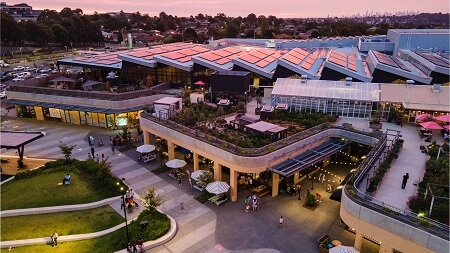
Claire: I think it's a testament to the connections that we've built. And while the community centre is a fantastic piece of amenity, and a great asset for our community, I never wanted there to be that dependency on the developer to initiate things, or on the community space. So it shows that those friendships and connections go beyond what we facilitate in the community centre. And Ed.Square has such good cafes and restaurants that people were able to relocate board games and journaling club and all the initiatives. That's always been the goal — to activate the wider asset of the retail amenity, and get people using the bowling alley. We've got an 80s bowling night coming up this weekend.
Brent: Tell us about the timetable of things you have coming through.
Claire: So there's two parts when you look at the program for Ed.Square. There's the ongoing resident-led events — we have something weekly, fortnightly, monthly. We've got weekly playgroup, meditation, Zumba Thursday night. We've got board games.
Brent: Can you show me how the Zumba works? Not today.
Claire: She's a regular. I'm a regular on Thursday night. So they're all led by volunteers, they all run independent of me, they're all running sustainably — I don't need to attend all of them. They have pin-code access, they come into the space and run these initiatives. So they're our ongoing resident-led, and then we have a calendar of regular — Diwali, four years running —
Pinky: The fifth — fifth year.
Brent: Fifth year? Okay.
Claire: — and those sort of cultural celebrations, they happen each year.
Brent: Yeah.
Pinky: Chinese New Year, potluck dinner...
Claire: And they're kind of your meet-your-neighbour and those traditions — because we know that through those traditions and rituals, when people celebrate those, it strengthens bonds in communities.
Brent: Yeah. Noting here, 145 different languages —
Claire: Yeah.
Brent: — within the community. So it is very, very diverse.
Claire: Very diverse.
Brent: And trying to cater for everybody there. Claire, something really important for Frasers Property is our partnership with Ending Loneliness Together. We've been doing that for three years now. How has that shaped the way you think about your work?
Claire: I think it's given greater focus on the social connections piece of the work that we do. We know at Ed.Square, in our latest Great Neighbourhood Survey, 95% of people smile and say hello to someone. And it's through those little incidental interactions that people feel less lonely, and they feel more connected with each other and with the place that they live. But I also think, as a community development professional, and as Frasers looks at their social sustainability piece, there are many areas we can work on and focus on. And seeing the research and the stats around loneliness, it really highlights that this is really meaningful work. This isn't fluffy social get-togethers. This is work that needs to be done at a societal level to break down isolation and end loneliness.
Brent: And we're now hearing government are getting more serious about this — that it feels like, in today's fast-paced age, we've lost that connection, and lost that ability to take a deep breath, say hello, and ask how people are going. Are they okay? So it's really important work being done there. And another statistic, again a testament to what's been happening at Ed.Square: it's reported that people living in Ed.Square are more connected — 50% more connected than those outside of it. So over half of them don't have that loneliness dependency. It's such a strong community there, really driving connection, that we're seeing in the numbers coming through when we've done surveys. Pinky, just touching on connection — there was a quote you mentioned before, about Ed.Square being a place where you felt a real sense of belonging, even more so than your home country of India. [Sure] Can you talk a bit more about that to me?
Pinky: When I came to Ed., kind of, I was thinking whether to stay here or not. And slowly — it's not only with her. Like, there's a resident of Ed.Square who is my brother now. He's an Aussie, he's an Australian — Andrew — and he has done all the rituals in my daughter's wedding.
Brent: Wow.
Pinky: My brother's rituals.
Brent: Yes.
Pinky: Okay. So, like, now what happens is that I feel more connected here than I was in India.
Brent: Yes.
Pinky: I feel this is my home. Though I've been born and brought up in India, and then I came here when I married my husband, and then I thought, my God, I'm going to a different country.
Brent: Yes.
Pinky: And now Ed.Square, the community here, and people around — I mean, we never feel lonely, and I feel I belong here. I never felt that in India. I mean, not so much as I feel here in Ed.Square.
Brent: Quite remarkable — the profound —
Pinky: Yeah. Whenever I feel lonely, I just have to give a call — we've got a bunch of friends here in Ed.Square. They are, again, more family than friends. Just call: I'm not feeling well, I'm not okay. And everybody would just come up, and then have a get-together.
Claire: And I see that. I see you looking after residents, taking chai. I run into one in the supermarket and they say, “I've just had my gallbladder out, and this person's bringing chai, and this person's had a baby, and we had a baby shower.” I see all of those connections.
Pinky: One of my friends, she suddenly had that gallbladder operation, and then we ran with tea, food, and everything. You don't have to cook. We are coming.
Brent: Yeah.
Pinky: It's that kind of old-fashioned, almost, connection we have in Ed. And I don't think I felt that even back in my country.
Brent: So you found your village. You found your home. And it's such a profound impact that it's had. Very, very happy for you and your family through that. Pinky, we mentioned 145 different dialects that are within Edmondson Park. How does that diversity become a strength for the community?
Pinky: Yeah, we are actually celebrating all these different religious celebrations, getting to know each other, getting to know different cultures, and getting to know their food through potluck dinner — we wait for that so much. I think it's enriched our inner being as well. A lot of knowledge as well — knowledge about so many different communities, so many different religions, so many different dialects. So it's made us richer, I feel.
Brent: I feel the community seems to have really leaned into the multicultural aspect of Edmondson Park.
Pinky: Yeah, everybody actually respects each other's —
Brent: And learns from each other, probably.
Pinky: Okay, fine. Somebody will just call: “Okay, fine, I loved your biryani, give me the recipe.” I'll ask, “I loved your seva, give me the recipe.” It's so common now.
Brent: Do you think it makes for a more tolerant society when you have a better understanding of —
Pinky: Amazing. Yeah, amazing. Most of the people are amazing.
Claire: Yeah, they really are.
Pinky: Yeah, everybody coming up to each other, saying — diversity, strength. And we've learned so much, and we love to live in that society. Different society coming together - so good.
Brent: Sounds like a great place to live. Claire, with everything you've experienced professionally, but also personally — with the interactions with not just Pinky, but hundreds, if not thousands, of people that you connect with — what's the number one thing you would say to a new neighbour moving into a new community? What advice would you give?
Claire: I think, show up — just show up as yourself. Come along, say hello, say hello to a neighbour. Don't be afraid to come out of your comfort zone, because it's when you come out of your comfort zone and show up genuinely that you feel seen. And when you feel seen as yourself, and you feel connected with another neighbour as your whole self, that's when you feel like you belong and you're part of something — because you're not being a chameleon, trying to fit in with the different people in the community. You're just being yourself. And I think Ed.Square is a unique, particular situation where everyone is so welcoming — and not every community is like that. But I think, once you show up and smile at a neighbour, build those little connections, a lot can grow.
Brent: The old 'love thy neighbour' — and that's what we're seeing here. So, Pinky, do you agree with what Claire is saying, about if somebody is moving into a new space, a new community? What are the key things you would like to tell them, from what you've learnt?
Pinky: Yeah, same thing. Whatever community events, or even the normal events, if they come up — once they are there, we'll embrace them, and we are friends again, and then there'll be that connection. So everybody should attend the community celebration, I feel — events that we do — so that we also get to know all the new people coming to Ed.Square, and they won't feel lonely anymore. Anybody coming down to the event, fine — then we are back to friends, as if we've met since so long. Yeah, not the first time.
Brent: It's an incredible story, and it's really blown me away how connected you are — but also the impact of what Claire and others are doing in the community space, and how it impacts individuals and families, and actually brings and solidifies community and brings out the best in people. Congratulations for all the work you've done there, Claire. Pinky, Claire — I know you're going to have a lasting and loving, long relationship. Feels like it's only been five or six years.
Claire: Six years of friendship now. She's already planning the next trip to India.
Brent: I'm sure there are going to be many, many stories that you can tell over a long period of time. So thanks so much for coming in and joining us. Really appreciate it.
Claire: Oh, thank you. Thanks for having us.
Pinky: Thank you.
Brent: Thanks for listening to the Live proud podcast, brought to you by Frasers Property Australia, creating stronger, smarter, happier neighbourhoods since 1924. Because pride starts with where you call home, but it grows through community spirit and a sense of belonging that makes life richer every day. Subscribe to hear more conversations that celebrate what it means to live proud.
Host

Brent Hill
Director of Sales & Marketing, Frasers Property Australia
Brent brings three decades of experience in property, real estate marketing and leadership to Frasers Property Australia, with deep expertise in driving customer-centred sales strategies and high-performing teams. He is known for his collaborative approach, commercial acumen and commitment to connecting people with communities that enhance the way they live.
Brent is passionate about innovation, data-driven decision making and elevating the Frasers Property brand through purposeful storytelling, strong partnerships and industry-leading customer outcomes.
Guest
Claire Palmer, Frasers Property Community Development Manager at Ed.Square.
Sanjukta "Pinky" Chandra, Ed.Square resident.
Also available on


Discover more episodes


*Disclaimer: The views, opinions, estimates, forecasts, and recommendations expressed in this podcast are those of Frasers Property Australia and any guest speakers and are provided in good faith based on information believed to be accurate and not misleading at the time of recording. These views do not necessarily reflect those of Frasers Property Australia as a whole. Frasers Property Australia does not make any express or implied representations or warranties that the opinions or statements of guest speakers are accurate, complete, or correct. The information discussed is of a general nature only and does not take into account your personal objectives, financial situation, or needs. This podcast does not constitute financial, legal, or other professional advice and should not be relied upon as such. Before making any decisions or taking action based on the information discussed, you should consider whether it is appropriate for your circumstances and, if necessary, seek independent professional advice.